

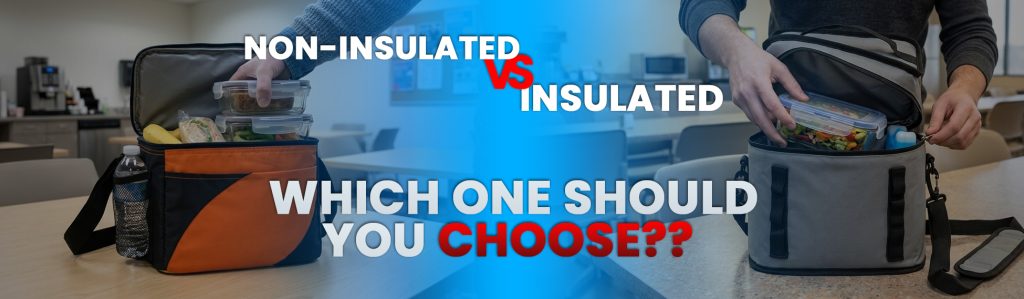
Choosing between an insulated or a regular custom lunch bag isn’t just about picking a design you like—it’s about how you actually live your life from 9 to 5. While one might look better on a desk, the other might be the only thing keeping your turkey sandwich from becoming a health hazard by noon.
If you’re staring at a dozen tabs trying to decide, here’s the reality of how these bags stack up in the real world.
The Core Difference: It’s All About the Layers
When we talk about a “regular” bag, we’re usually looking at a single layer of canvas, cotton, or polyester. They’re basically stylish envelopes for your food. They keep things organized, but they offer zero protection against the weather.
On the other hand, insulated lunch bags (often called thermal lunch bags) are engineered. They use a “sandwich” construction:
- An outer durable shell.
- A middle layer of dense foam to trap air.
- An inner waterproof lining that reflects heat or cold back toward your food.
Why Insulation Matters More Than You Think
It’s easy to think insulation is just a “luxury” feature, but there are some pretty practical lunch bag insulation benefits that affect your daily routine:
- The 2-Hour Rule: According to food safety standards, perishable food shouldn’t sit at room temperature for more than two hours. If your commute is long, a regular bag just won’t cut it.
- No More “Soggy” Factor: Heat makes things sweat. If you put a warm container in a regular bag, the moisture has nowhere to go, often leading to soggy bread or wilted greens. Thermal linings help regulate that transition.
- Office Fridge Freedom: Most lunch bags for office workers are insulated for one reason: office fridges are often gross, crowded, or prone to “lunch theft.” An insulated bag with an ice pack lets you keep your food at your desk, safe and cold.
The Case for Regular Custom Lunch Bags
Don’t count out the classic version just yet. There are plenty of times when a simple reusable lunch bag is actually the smarter move.
1. Minimalist Storage
Because they don’t have thick foam padding, regular bags fold down to almost nothing. If you have a small locker or a crowded backpack, being able to fold your bag and tuck it away after lunch is a huge win.
2. High-Maintenance Cleaning
Let’s be honest: lunches leak. A regular canvas or nylon bag can usually be flipped inside out and tossed directly into the washing machine. Insulated bags usually require careful hand-wiping to avoid damaging the inner foil.
3. The “Dry” Lunch
If you’re a “fruit, nuts, and a protein bar” kind of person, insulation is dead weight. A regular bag is lighter, cheaper, and gets the job done without the extra bulk.
Why Insulated Bags Are the Modern Standard
Despite the perks of a simple bag, most people find that waterproof lunch bags with thermal lining solve more problems.
Handling the Elements
If you work in a field that isn’t a temperature-controlled office—like construction, teaching, or outdoor sales—your lunch is at the mercy of the environment. An insulated bag acts as a buffer against a hot car or a cold morning.
Versatility Beyond Lunch
A high-quality thermal bag isn’t just for your midday meal. People use them to keep baby bottles warm during trips, to transport frozen groceries home, or even to keep a few drinks cold for a post-work sunset hang.
Personalizing Your Gear
Whether you go for thermal or regular, opting for custom lunch bags adds a layer of ownership. In a corporate setting, a branded bag is a subtle way to build culture. For an individual, it’s a way to ensure your bag doesn’t get confused with someone else’s identical store-bought version in the breakroom.
Real-World Comparisons
- The Commuter: If you’re taking the subway or bus for 45 minutes, go insulated. The ambient heat in public transit can ruin a salad faster than you’d think.
- The Student: If you have a locker and a short walk to school, a regular bag is likely fine. It’s easier to cram into a backpack full of heavy books.
- The Gym Enthusiast: If you meal prep and need to keep a high-protein meal fresh for hours after your workout, insulated is the only way to go.
Maintenance & Care
To keep your bag from smelling like last week’s tuna, follow these quick tips:
- Insulated: Use a mix of water and white vinegar to wipe the lining every Friday. It kills bacteria and neutralizes odors without ruining the material.
- Regular: Wash on a cold cycle and always air dry. Putting custom printed bags in a high-heat dryer is the fastest way to crack the logo or shrink the fabric.
FAQ: Quick Answers for Your Search
Can I put an insulated bag in the fridge?
You can, but it’s actually counterproductive. The insulation is designed to keep the temperature inside the bag stable. If you put a sealed insulated bag in the fridge, the cold air will have a hard time reaching your food. It’s better to open the bag or just use an ice pack inside.
How do I know if a bag is truly waterproof?
Look for “heat-sealed” seams. If the inner lining is sewn together with thread, liquid can leak through the needle holes. Heat-sealed linings are one continuous piece of material.
Are custom bags more expensive to maintain?
Not necessarily. The “custom” part is usually just the print or embroidery. The care instructions remain the same as any other high-quality reusable bag.
Final Verdict
If you want the most “future-proof” option, go with an insulated custom lunch bag. It covers every scenario—from hot leftovers to cold smoothies—and provides a sturdier structure that protects your food from getting crushed.
However, if you prioritize a light carry and easy washing, and you aren’t worried about food spoilage, a regular reusable lunch bag is a classic, dependable choice. Pick the one that matches your longest day, not your shortest one.