

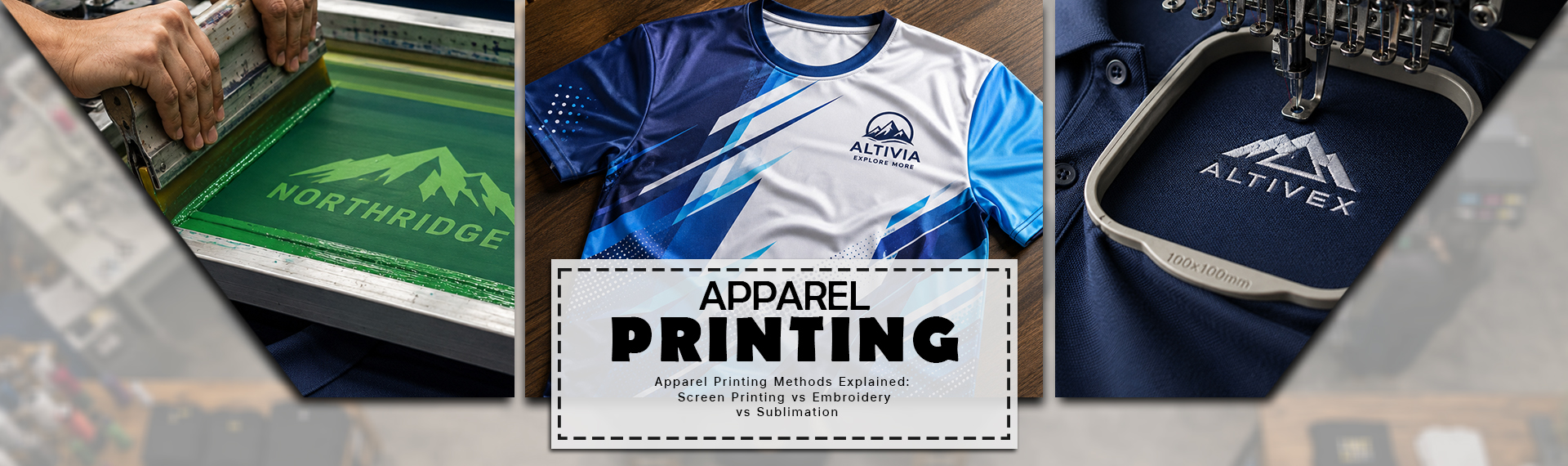
When you need to put a logo on a t-shirt, jacket, or cap, the sheer number of options can quickly feel overwhelming. You want something that looks sharp, doesn’t peel off after three cycles in the wash, and fits your budget. But if you choose the wrong method, you might end up with a stiff, unwearable shirt, a logo that cracks, or a bill that makes you wince.
To get the best results, you need to understand the mechanics behind custom apparel printing.
While there are dozens of niche decoration styles out more modern textile shops, three industry-standard methods dominate the landscape: screen printing, custom embroidery, and sublimation printing. Each has its own distinct personality, ideal fabric match, and cost structure. Here is an honest, practical breakdown of how they work and how to choose the right one for your branded clothing.
Screen Printing: The High-Volume Classic
If you have ever bought a band t-shirt or a classic souvenir tee, you have almost certainly worn screen printing. This traditional method is the backbone of the custom apparel printing industry.
The process is highly tactile. Printers create a unique stencil, called a screen, for every single color in your design. They lay the fabric flat, place the screens on top, and use a squeegee to press thick ink through the stencils directly onto the garment. Once the ink is applied, the shirt runs through a high-temperature dryer to cure the print.
When Screen Printing Shines
Screen printing is unbeatable for bulk orders with bold, simple graphics. Because the setup process (burning the screens and calibrating the press) is labor-intensive, shops usually require minimum order sizes. However, once those screens are ready, the actual printing process is incredibly fast. That means the cost per shirt drops drastically as your order size increases. It works beautifully on 100% cotton and heavy cotton blends.
The Limits to Keep in Mind
If your design features a high-resolution photograph or a complex gradient with dozens of colors, screen printing is rarely the right fit. Creating twenty separate screens for a single shirt is incredibly expensive and inefficient. Additionally, the ink sits on top of the fabric, which can create a heavy, rubbery patch on the chest if the design is too large.
Embroidery: The Corporate Gold Standard
When a clean, professional aesthetic is your top priority, you should skip ink altogether. Embroidery uses computer-controlled machines to stitch high-strength polyester or rayon threads directly into the fabric of your garment.
Before a machine can stitch a single thread, your design must go through a digital translation process called digitizing. This turns your digital image file into a map of vector paths, density levels, and stitch patterns that the embroidery machine can read.
When Embroidery Shines
Embroidery is the ultimate choice for corporate branded clothing, outerwear, and professional uniforms. It adds a premium, three-dimensional texture to polo shirts, heavy canvas jackets, fleece vests, and structured hats. It projects an immediate sense of quality, longevity, and trust. Furthermore, because you are paying for thread density rather than the number of colors, you can use multiple colors in your logo printing without driving up the price.
The Limits to Keep in Mind
Thread is thick, which means it requires a sturdy fabric base. If you try to embroider a massive, solid logo onto a ultra-thin, lightweight performance t-shirt, the fabric will likely pucker, pull, and drape poorly. Embroidery is also ill-suited for tiny details, thin lines, or microscopic text, as the physical thickness of the thread can cause small details to blur together.
Sublimation Printing: Seamless, High-Definition Performance
If screen printing sits on top of the fabric and embroidery stitches into it, sublimation printing actually becomes a part of the fabric itself.
Sublimation is a chemical process that relies on specialized heat-activated dyes. The design is first printed onto a unique transfer paper. Then, using a high-heat press, the dye is pressed against the garment. The extreme heat causes the dye to instantly turn into a gas, while opening up the pores of the synthetic fibers. The gaseous dye enters the open fibers, and as the heat is removed, the pores close, permanently locking the color inside the fabric threads.
When Sublimation Shines
Because the dye becomes part of the fiber, there is absolutely zero texture to the print. If you run your hand over the shirt, you won’t feel where the design starts or ends. This makes sublimation printing the premier choice for activewear, team jerseys, and full-bleed, all-over designs. It keeps performance fabrics lightweight and breathable. You can also print high-definition photos, intricate gradients, and infinite colors with perfect clarity.
The Limits to Keep in Mind
Sublimation only works on synthetic materials—specifically 100% polyester or very high polyester blends. It will not bind with natural cotton fibers. Additionally, because the gaseous dyes are translucent, you can only sublimate onto white or very light-colored garments. Trying to sublimate a colorful logo onto a black shirt will result in a design that is completely invisible.
The Simple Decision Framework
Choosing between these three methods does not have to be a guessing game. You can usually find your perfect match by asking three basic questions:
- What is the fabric? If you are customizing cotton t-shirts or hoodies, choose screen printing. If you are customizing performance athletic wear, choose sublimation. If you are customizing heavy polos, jackets, or caps, choose embroidery.
- What does the artwork look like? If your logo is simple, bold, and has fewer than four colors, screen printing or embroidery will serve you well. If your artwork is a highly detailed, colorful illustration, sublimation is your best bet.
- How many do you need? For small runs of professional uniforms, go with embroidery. For massive runs of promotional giveaway gear, go with screen printing.
Frequently Asked Questions
Will screen printed designs crack and peel over time?
If a screen print is cured properly in a professional dryer, it should last for years. However, over decades of washing and drying at high heat, the ink layer can naturally begin to degrade or crack. Washing your garments inside out and air-drying them is the easiest way to prevent this.
Can you embroider any type of clothing?
Technically yes, but heavy, stable fabrics yield the best results. Lightweight, stretchy fabrics like thin performance polyester or fine jersey cotton can warp and pucker around the heavy stitch work, making the garment sit awkwardly on the body.
Why can’t you use sublimation on cotton shirts?
The chemistry of sublimation dye requires synthetic polymers (like polyester) to open up under heat and trap the ink. Natural fibers like cotton do not have these polymer pores, so the dye simply sits loosely on the surface and washes away completely during the very first laundry cycle.