

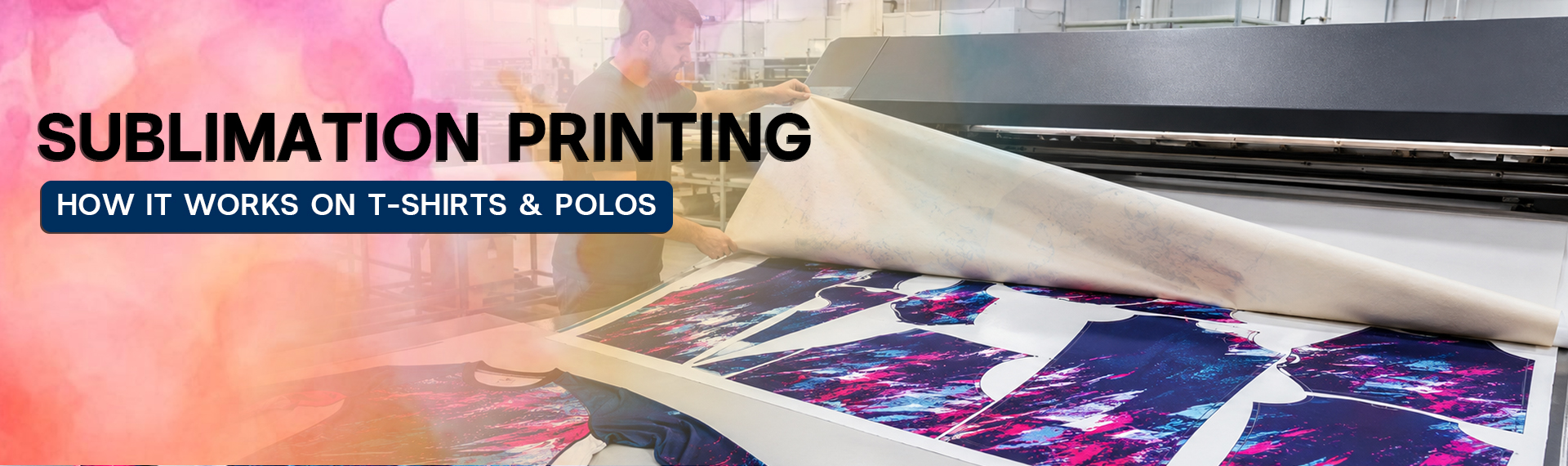
Ever run your hand over a graphic shirt and noticed you couldn’t actually feel the print? No thick layer of rubbery ink, no stiff patches, and no cracking when you stretch the fabric. That is usually the result of sublimation printing.
Unlike old-school methods that basically stamp a layer of plastic paint onto a shirt, sublimation forces the design to become part of the actual threads. It has completely flipped the script for full color apparel printing. It is easily the best way to make detailed custom t-shirts, athletic gear, and promotional apparel that look incredibly sharp but feel like you’re wearing absolutely nothing.
So, how do you take a digital file on a computer and permanently fuse it into the microscopic threads of a polo? Let’s break down the actual science, how the machine setup works, and why it’s such a game-changer for custom gear.
The Core Science Behind the Dye Sublimation Process
The word “sublimation” sounds like a high school chemistry flashback, and honestly, that’s exactly what it is. In physics, it describes what happens when a solid turns directly into a gas, completely skipping the liquid phase.
The dye sublimation process uses this exact trick to dye fabric from the inside out. Here is what that looks like on a real shop floor:
- Printing the mirror image: Your logo or design gets printed onto a special sheet of heat-resistant transfer paper using specialized, solid dye inks.
- Locking down the press: The operator lines up the paper face-down against a blank shirt. The whole thing goes into a heavy industrial heat press, which clamps down tight at temperatures ranging from 375°F to 400°F.
- The big swap: This intense heat does two things at once. It turns the solid ink on the paper into a gas instantly. At the exact same fraction of a second, the heat causes the synthetic fibers of the shirt to swell up and open wide.
- The permanent lock: The gassed-out dye rushes into those open pores in the yarn. As soon as the press opens up and things cool down, the fabric pores snap shut, trapping the color permanently inside the threads as a solid again.
Why Synthetic Fabrics Hold the Key
You can’t just run out to a big box store, grab a pack of basic cotton undershirts, and stick them in a sublimation machine. If you try to sublimate 100% cotton, your design will look incredibly washed out on minute one, and the rest will completely vanish the first time it goes through the laundry.
This printing style relies entirely on synthetic materials, specifically polyester or high-poly blends. Polyester molecules are uniquely built to open up under extreme heat and form a permanent chemical lock with the ink gas. Because of that, premium sublimation apparel is almost always 100% synthetic.
If you are ordering custom printed polos for a business or jerseys for a sports team, this requirement is a massive win. Performance fabrics are meant to pull sweat away from your body to keep you cool. Because sublimated ink integrates right into the yarn instead of sitting on top like a giant sticker, it won’t clog the weave of the shirt. The fabric stays totally breathable.
The Real Advantages for Custom T-Shirts and Polos
When you stack sublimation up against classic screen printing or modern direct-to-garment (DTG) options, it wins out for a few major reasons:
Photographic Clarity
Since gas blends together way better than tiny drops of liquid ink, you get incredibly smooth color transitions, fine lines, and perfect photo quality. If your company logo has intricate gradients, sublimation handles it perfectly.
Real Longevity
Because the color lives inside the thread, the print literally cannot peel, crack, or flake off. The design lasts as long as the shirt itself does.
Zero Texture
If you close your eyes and feel a sublimated custom t-shirt, you won’t be able to tell where the graphic is. It just feels like raw, soft fabric. That makes it insanely comfortable for long workdays, golf tournaments, or outdoor events.
Practical Examples: When Sublimation Makes Sense
Sublimation is a specialized tool. It is perfect for certain jobs, but overkill for others. Here is where it absolutely crushes the competition:
- Custom Printed Polos for Active Work: Think esports teams, golf club staff, or cycling groups. These shirts need tons of bright colors, sponsor logos, and individual names, but they can’t afford any extra weight or stiffness.
- All-Over Promotional Apparel: Planning a charity marathon or setting up a booth at a massive trade show? Sublimation lets you print edge-to-edge patterns across the entire shirt—all the way over the shoulders and down the sleeves—to really stand out.
- Corporate Field Uniforms: If your crew works outdoors, handles deliveries, or does manual tech work, they need gear that survives heavy use. Sublimated poly-polos stay looking brand new even after months of baking in the sun and hitting industrial wash cycles.
Frequently Asked Questions About Sublimation Printing
Can you use sublimation printing on dark-colored shirts?
No, it doesn’t work on dark colors. Sublimation ink is translucent, kind of like watercolors. If you try to put a bright logo onto a navy or black shirt, the dark background just swallows the ink up. You always need a white or very light-colored canvas to start with.
Is sublimation more expensive than screen printing?
It depends on the size of your order. For a small run of shirts with incredibly detailed, multi-colored logos, sublimation is cheaper because you don’t have to pay for a dozen separate color screens. But if you are printing 1,000 shirts with a simple one-color logo, traditional screen printing is still the cheaper route.
Will the design fade over time?
Nope. Since the ink is chemically fused inside the polyester fibers rather than dried on top of them, it won’t fade or wear out from regular washing, stretching, or daily friction.
Final Thoughts
Sublimation printing is the way to go when you want incredible design detail without sacrificing comfort or longevity. By turning solid ink straight into a gas, it gives you a reliable way to customize performance t-shirts and polos with zero-texture graphics that look brand new for years. When your project demands bright colors, heavy-duty durability, and total breathability, the dye sublimation process is tough to beat.